
Timing chains are often thought of as “lifetime” components, but in many BMW engines they’ve earned a reputation for wearing out prematurely. At Steinway Auto Repair Astoria NY, we are an established BMW Service and Repair Center since 1997. We’ve seen a steady stream of BMWs with timing-related issues, and most owners don’t realize how critical these chains are — or how devastating a failure can be if it’s ignored. This article will help you understand why timing chains fail in popular BMW engines, what symptoms to watch for, and what your repair and replacement options are.
We’ll focus on four engines that are particularly prone to timing chain problems: the N20, N26, N63, and N47 diesel.
Why Timing Chains Matter (Quick Primer)
Your engine’s timing chain synchronizes the rotation of the crankshaft and camshafts. This precise timing ensures that valves open and close at exactly the right moment during each combustion cycle. If the chain stretches, jumps a tooth, or fails completely, engine timing is lost, which can lead to:
- Rough running or misfires
- Loss of power
- Engine damage (in interference engines)
In BMW’s high-performance and compact engines, a timing chain failure can be both sudden and catastrophic.
BMW N20 & N26: Early Turbo 4-Cylinder Timing Chain Woes Engines Affected
- N20 2.0L turbocharged inline-4 (2011–2016)
- N26 similar to N20 but with emissions hardware change
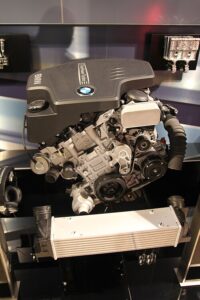
These engines are found in the 3 Series (328i), 5 Series, X3, X4, Z4, and Mini Cooper S.
Why They Fail
The N20/N26 timing chain runs at the rear of the engine, buried under the intake manifold. Early designs rely on plastic timing guides and tensioners, which are susceptible to:
- Premature wear or failure of plastic chain guides
- Weak tensioner springs or oil control issues
- Oil contamination or low oil pressure
- Excessive chain stretch under high RPM driving
The high torque output of the turbocharged design accelerates wear on these parts.
Common Symptoms
Typically, the first signs of problems include:
- Rattling at startup — especially during cold starts
- Rough idle or misfires
- Check Engine Light with cam/crank correlation faults
- Loss of power or hesitation
- No-start condition (if the chain jumps significantly)
Owners often dismiss early rattles as “normal BMW noise,” but delayed action can lead to serious internal damage.
Fixes & Solutions
- Timing Chain Kit Replacement: Includes new guides, tensioners, sprockets, and chain. Replace at first signs of wear — often recommended before 80,000 miles in high-stress use.
- Rear Main Seal & Oil Pump Inspection: Because of the rear location, we often service the oil pump and rear main seal at the same time.
- Oil & Filter Service: Use high-quality oil and maintain proper service intervals — proper lubrication reduces guide wear.
Bottom line: Replacing the chain and supports proactively can save thousands in engine repairs.
At Steinway Auto Repair in Queens NY, our expert mechanics for BMW Repair Astoria can diagnose and fix the issue with your BMW.
BMW N63: V8 Twin-Turbo Timing Chain Concerns
Engine Overview
The N63 is BMW’s twin-turbocharged 4.4L V8 found in high-end 5, 6, 7 Series, X5, and X6 models. It’s powerful and complex — and timing chains are a known weak point.
Why They Fail
The N63 has two timing chains per bank (one primary, one secondary), and timing guide failures are common. Key contributing factors include:
- Inadequate timing chain guide materials
- Oil degradation from heat stress
- High operating temperatures affecting tensioner function
- Variable valve timing complexity puts additional load on the chain
Because the N63 is an interference engine, a failure can result in valve-to-piston contact and bent valves.
Common Symptoms
Watch for:
- Rattle or knocking from the front of the engine
- Check Engine Light with cam/crank correlation codes
- Rough running and loss of power
- Misfire codes and/or limp mode
- Oil leaks near timing cover
Because two banks are involved, sometimes one side fails before the other — diagnosis needs care.
Fixes & Solutions
- Full Timing Chain Service: Replace chain, guides, and tensioners on both banks.
- Oil Cooler & Filter Housing Service: N63s are prone to oil leaks; while servicing timing chains, inspect and repair if needed.
- Thermostat & Cooling System: Keeping operating temps in check helps chain longevity.
The N63 responds well to comprehensive timing chain overhauls, but partial fixes or skipping guides/tensioners is a recipe for repeat failure.
BMW N47 Diesel: Common Rail Diesel Timing Chain Challenges
Engines Affected
The N47 2.0L diesel (used across 1, 2, 3, 5 Series and X models) developed a reputation for timing chain issues, especially early builds.
Why They Fail
The N47 has a short-life timing chain system that can stretch or fail due to:
- Inadequate tensioner design
- Oil contamination (common with diesel soot and EGR particles)
- Low-speed, short-trip driving that doesn’t allow full oil temp
- Cold starts with heavy load on chain and guides
When the chain stretches, it can jump teeth on the sprocket — this changes valve timing and can cause severe engine damage.
Common Symptoms
Diesel owners often report:
- Rattling from the front of the engine
- Start-stop roughness
- Loss of power and poor fuel economy
- Engine warning lights
- Complete failure leading to no-start
N47 timing chain failures were so common that BMW extended warranties in some markets, though owners outside those programs still face repair costs.
At our center for BMW Service Astoria Queens, we are ready to work with you for cost effective solutions to keep your BMW running.
Fixes & Solutions
- Timing Chain & Guide Set: Best done proactively — especially for cars beyond 80,000–100,000 miles.
- Oil & Fuel System Maintenance: Keeping clean oil and a healthy fuel system reduces contamination and wear.
- EGR & DPF Service: Excess soot and EGR contamination exacerbate wear and should be cleaned.
Prompt attention to early noises can avoid catastrophic failures.
Common Causes Across All Engines
While each engine has its nuances, timing chain failures usually stem from a combination of these factors:
- Oil Quality & Maintenance
Your timing chain relies on clean, properly viscous oil to lubricate and damp tensioner movement. Delayed oil changes, wrong oil viscosity, and extended drain intervals accelerate wear on tensioners and guides.
Tip: Always follow BMW oil specs and change filters regularly.
- Chain Guide & Tensioner Materials
Many of these engines use plastic guides and hydraulic tensioners that degrade with heat, age, and contamination. When tensioners can’t keep proper chain tension, the chain stretches prematurely.
- Engine Design & Operating Conditions
Turbocharged engines and high-revving performance designs put extra load on timing systems. Frequent short trips and cold starts increase wear because the oil doesn’t reach optimal temperature quickly.
- Low Oil Pressure
Diesel engines in particular can see oil thickening at low temp or high soot conditions. Low pressure starves the tensioner system, reducing damping and causing chain slap.
Telltale Symptoms: What to Watch For
Understanding the early signs can save you big repair bills:
| Symptom | Possible Meaning |
| Rattling at cold start | Worn chain guides / slack chain |
| Rough idle | Timing inconsistency or misfires |
| Check Engine with cam/crank codes | Chain jumped timing |
| Loss of power / hesitation | Timing has shifted significantly |
| No-start | Chain jumped or broken |
| Oil leaks at timing cover | Seal failure or tensioner oil pressure issue |
If you hear unusual noises from the front of the engine — especially at idle or startup — don’t ignore it. The timing chain doesn’t make noise when it’s fresh.
Diagnostics: What We Do
At Steinway Auto Repair, a proper diagnosis involves:
- Listening for chain noise at startup
- Scanning for cam/crank correlation and misfire codes
- Inspecting oil condition and pressure
- Visual inspection via oil cap and timing cover when possible
- Compression and leak-down testing if timing is in question
Certain faults (such as misfires) can have multiple causes, so timing chain issues are always confirmed with a combination of symptoms, codes, and mechanical inspection.
Replacement and Repair Options
Timing Chain Kit Replacement
This is a comprehensive fix and includes:
- New chain
- New guides
- Tensioners
- Sprockets
- Seals and gaskets
Depending on the engine, the labor can be significant — especially on the N20/N26 (rear access) and N63 (dual banks). But cutting corners rarely pays.
Oil & Ancillary Services
During timing work, we often recommend:
- Oil and filter change
- Replacement of valve cover gaskets
- Inspection of oil pump
- Coolant thermostat or water pump service (engine-specific)
Bundling related services saves money in the long run.
Preventing Timing Chain Problems
While some engines are more prone to failure, you can reduce risk by:
- Maintaining frequent oil changes with BMW-approved oil
- Avoiding excessive short trip driving
- Heeding early warning signs
- Performing engine tune-ups and sensor checks
Our shop specializes in BMW Service Astoria Queens. Our expert mechanics provide high quality service for your BMW.
A timing chain issue may seem subtle at first, but it’s an expensive and destructive failure if left too long.
Final Thoughts
Timing chain failures in the BMW N20, N26, N63, and N47 diesel engines aren’t rare — but they are avoidable with attention, preventive maintenance, and early diagnosis. For BMW owners, understanding the signs and acting promptly can mean the difference between a straightforward repair and a catastrophic engine failure.
If you’re hearing unusual noises, experiencing rough running, or have recurring engine codes, don’t delay. Bring your BMW into Steinway Auto Repair Queens for a thorough inspection — and the peace of mind that comes from knowing the heart of your engine is in good hands.
The above content does not constitute advice for your individual vehicle, but is presented for informational purposes only. If your vehicle is having any issues, then seek the help of a professional mechanic.