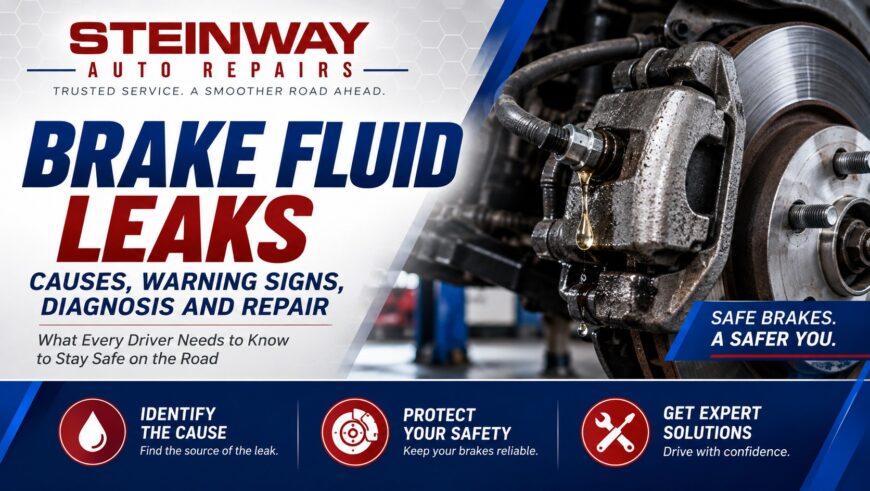

Your vehicle’s braking system is one of its most important safety systems, and brake fluid plays a critical role in making that system work. What follows is important information on brake fluid leaks. When you press the brake pedal, brake fluid transfers hydraulic pressure from the master cylinder through the brake lines and hoses to the brakes at each wheel. That hydraulic pressure is what ultimately allows the brake pads or shoes to slow and stop the vehicle.
Because the system depends on hydraulic pressure, a brake fluid leak should never be treated as a minor maintenance issue. Even a relatively small leak can eventually reduce braking performance, allow air into the hydraulic system, and potentially lead to partial or significant brake failure.
At Steinway Auto Repair, a Car Repair Shop in Astoria we recommend having any suspected brake fluid leak inspected as soon as possible. If you are searching for brake repair Astoria drivers can rely on, understanding the symptoms of a brake fluid leak and having the source properly diagnosed are important first steps toward getting the problem corrected safely.
What Does Brake Fluid Actually Do?
Most modern passenger vehicles use a hydraulic braking system. When the driver pushes down on the brake pedal, the pedal applies force to the brake master cylinder. The master cylinder pressurizes the brake fluid, sending that pressure through steel brake lines and flexible brake hoses to the brake calipers or wheel cylinders.
On vehicles equipped with disc brakes, hydraulic pressure causes the caliper pistons to press the brake pads against the brake rotors. On vehicles using drum brakes, the pressure activates wheel cylinders that push the brake shoes against the drums.
Brake fluid works especially well for this purpose because liquids are essentially incompressible. Pressure applied at one end of the hydraulic system can therefore be transmitted efficiently throughout the braking system.
The problem begins when the system is no longer sealed.
A leak allows brake fluid to escape and may allow air to enter. Unlike brake fluid, air can be compressed. Air inside the hydraulic system can therefore cause a soft or spongy brake pedal and reduce the amount of braking force reaching the wheels.
For drivers seeking brake service in Astoria, it is important that an inspection goes beyond simply checking brake pads and rotors. The hydraulic components that make the entire braking system function should also be examined.
What Does a Brake Fluid Leak Look Like?
One of the difficulties consumers face is distinguishing brake fluid from the many other fluids found in a vehicle.
Fresh brake fluid is generally clear to light amber, although it typically becomes darker as it ages. Depending on its age and condition, leaking brake fluid may appear yellowish, light brown or dark brown.
Brake fluid also tends to feel slippery or oily, although identifying an automotive fluid by touching it is not recommended. If you discover an unexplained fluid underneath your vehicle, particularly near one of the wheels or beneath the engine compartment, it is better to have the source identified professionally.
Location provides an important clue. Fluid appearing near the inside of a wheel may indicate a leaking brake caliper, wheel cylinder or flexible brake hose. Fluid beneath the middle or underside of the vehicle could originate from a corroded or damaged brake line. Fluid near the firewall or master cylinder may indicate a problem with the master cylinder itself.
However, location alone is not enough to accurately diagnose the problem. Fluids can travel along suspension components, brake lines, shields and other surfaces before dripping onto the ground.
Common Symptoms of a Brake Fluid Leak
A puddle underneath the vehicle is not always the first symptom. In fact, some brake fluid leaks are small enough that little or no fluid reaches the pavement.
One of the most important warning signs is a soft or spongy brake pedal. Instead of feeling firm and predictable, the pedal may feel unusually soft or require more travel before the brakes respond.
Another particularly serious symptom is a brake pedal that gradually sinks toward the floor while pressure is being applied. This can indicate a hydraulic pressure problem involving an external leak or an internal problem within the master cylinder.
Drivers may also notice reduced braking effectiveness or that the vehicle takes longer than normal to stop. Any noticeable change in braking performance deserves immediate attention.
A brake warning light on the dashboard may also appear. Depending on the vehicle, the warning may be triggered by low brake fluid, an imbalance in the hydraulic system or another braking-system fault.
Another obvious clue is a low brake fluid level in the master-cylinder reservoir. Brake fluid levels can decline somewhat as brake pads wear because the caliper pistons extend farther outward. However, repeatedly adding brake fluid is not normal. If the reservoir is losing fluid, the reason needs to be determined.
If you need Auto repair in Astoria because of a brake warning light or changing pedal feel, make sure the problem is diagnosed rather than simply assuming that new brake pads will correct it.
What Causes Brake Fluid Leaks?
Brake fluid leaks can develop in several parts of the braking system. The correct repair depends entirely on identifying where the fluid is escaping.
Corroded Brake Lines
Steel brake lines run along the underside of the vehicle and are exposed to water, road debris, salt and other contaminants. Over time, corrosion can weaken the metal.
This is particularly important on vehicles driven in New York City and the Northeast, where road salt and deicing chemicals are commonly used during winter. A brake line may look rusty for years before corrosion finally penetrates the tubing and creates a leak.
Severe corrosion can also create a dangerous situation in which a weakened line suddenly ruptures when the driver applies heavy brake pressure.
A badly corroded brake line should generally be replaced rather than patched with a questionable temporary repair. The surrounding lines should also be carefully inspected because corrosion is rarely limited to one tiny spot.
Damaged Flexible Brake Hoses
The brake lines attached to the vehicle body cannot remain rigid all the way to the wheels because the wheels move with the suspension and turn with the steering. Flexible brake hoses provide the necessary movement.
Age, heat, contamination and repeated flexing can eventually cause these hoses to crack, deteriorate or leak around their fittings.
Brake hoses can also develop internal damage. In some cases, a deteriorated hose can restrict fluid movement even when no major external leak is visible. A damaged brake hose should be replaced with the correct part and the hydraulic system properly bled afterward.
Leaking Brake Calipers
Disc-brake calipers contain pistons and seals that must hold hydraulic pressure while allowing the pistons to move. If a piston seal deteriorates or corrosion damages the sealing surface, brake fluid may begin leaking from the caliper.
Fluid may appear on the inside of the wheel, around the caliper or on surrounding suspension components.
A leaking caliper normally requires replacement or professional rebuilding. The brake pads and rotor must also be inspected. Brake pads contaminated with brake fluid generally need replacement because contamination can seriously affect friction and braking performance.
An experienced Auto Mechanic in Astoria should look at the entire brake assembly rather than simply replacing the visibly leaking component. A fluid leak can sometimes damage or contaminate other parts that also need attention.
Leaking Wheel Cylinders
Many vehicles, particularly certain older vehicles and some trucks and economy models, use drum brakes on the rear wheels. Inside each drum is a hydraulic wheel cylinder.
When wheel-cylinder seals deteriorate, brake fluid can leak inside the brake drum. Because the leak is concealed by the drum, the driver may not see fluid underneath the vehicle.
Instead, the problem may first appear as poor rear braking, an unusual pedal feel or fluid loss from the reservoir.
Once the drum is removed, brake fluid may be visible around the wheel cylinder and brake shoes. A leaking wheel cylinder should be replaced, and contaminated brake shoes should generally be replaced as well.
Master Cylinder Failure
The brake master cylinder converts pedal force into hydraulic pressure. Internal seals inside the master cylinder can wear out, allowing pressure to bypass internally. External seals can also leak.
An internally failing master cylinder may cause the brake pedal to slowly sink even when no obvious external fluid leak is visible.
An external leak may appear around the master cylinder or where it attaches to the brake booster. In some cases, brake fluid can leak toward or into the booster, making the problem less obvious during a casual inspection.
Master-cylinder problems require careful diagnosis because replacing unrelated brake components will not correct an internal hydraulic bypass.
ABS Hydraulic Unit and Connections
Modern vehicles typically have an Anti-lock Braking System (ABS) containing hydraulic components, valves, pumps and multiple brake-line connections.
Leaks involving the ABS hydraulic control unit are less common than deteriorated lines or hoses, but they can occur. Because ABS components can be expensive, accurate diagnosis is particularly important before replacing anything.
How a Brake Fluid Leak Is Diagnosed
Proper diagnosis begins by confirming the complaint and inspecting the brake fluid level and condition.
The hydraulic system is then examined for visible signs of leakage. This includes the master cylinder, brake-line connections, ABS hydraulic components, steel brake lines, flexible hoses, calipers and, where applicable, wheel cylinders.
The underside of the vehicle deserves particular attention. A small area of corrosion can hide significant deterioration, especially where brake lines run through clips, brackets or areas where moisture and road salt collect.
The brakes at each wheel should also be inspected. If fluid is visible near a caliper, it is necessary to determine whether the caliper itself is leaking or whether the fluid is coming from the hose or fitting above it.
Drum-brake systems may require removal of the drums to inspect the wheel cylinders.
Pedal behavior also provides useful diagnostic information. A pedal that feels spongy may indicate air in the hydraulic system, while a pedal that slowly sinks under steady pressure can point toward fluid loss or internal master-cylinder bypass.
The goal is not simply to find where fluid is visible. The goal is to identify why the system is losing hydraulic pressure and determine whether other components have been affected.
This type of systematic diagnosis is important when choosing a shop for Auto Repair in Queens, particularly because replacing brake parts without identifying the actual source of hydraulic pressure loss can waste money without correcting the underlying problem.
Why Simply Adding Brake Fluid Is Not a Repair
One of the biggest mistakes a driver can make is repeatedly adding brake fluid without determining why the level is low.
Topping off the reservoir may temporarily restore the fluid level, but it does nothing to repair a leaking brake line, hose, caliper, wheel cylinder or master cylinder.
If fluid continues escaping, braking performance may continue deteriorating.
There is another reason to avoid automatically topping off the reservoir. Brake fluid level normally changes somewhat as brake pads wear. When new pads are installed and the caliper pistons are pushed back into their bores, the fluid level rises again.
Therefore, low fluid does not automatically prove that a leak exists, but it does mean the braking system should be inspected to determine the cause.
The Best Repair Depends on the Source
There is no universal repair for a brake fluid leak.
A leaking flexible hose requires hose replacement. A leaking caliper may require caliper replacement. A failed wheel cylinder needs to be replaced. A corroded steel line may require replacement of the affected line or a larger section of the brake-line system if corrosion is widespread.
A failing master cylinder may require replacement followed by proper bleeding of the hydraulic system.
After opening the hydraulic system for a repair, air must be removed through a proper bleeding procedure. Depending on the vehicle and the repair performed, specialized procedures or scan-tool functions may be necessary, particularly if air has entered the ABS hydraulic unit.
This is why brake repairs are about more than simply replacing the component that appears wet.
Brake Fluid Contamination Can Create Additional Repairs
Brake fluid should never come into contact with brake pads or brake shoes.
These friction materials are designed to operate dry. If they become saturated with brake fluid, their ability to generate predictable friction can be compromised. Cleaning heavily contaminated friction material is generally not the best solution.
The rotor or drum must also be thoroughly inspected and cleaned appropriately, while contaminated pads or shoes may need replacement.
Brake fluid can also damage automotive paint. If brake fluid is accidentally spilled onto a painted surface, it should be addressed immediately rather than allowed to remain on the finish.
Should You Drive With a Brake Fluid Leak?
A confirmed or strongly suspected brake fluid leak is not something to postpone.
If the brake pedal is unusually soft, sinks toward the floor, braking ability has noticeably decreased, the brake warning light is illuminated in conjunction with braking symptoms, or the reservoir is rapidly losing fluid, the safest course is generally to stop driving the vehicle and have it transported for inspection.
The fact that the vehicle still stops does not mean the braking system is safe.
Modern braking systems incorporate separate hydraulic circuits to provide a degree of redundancy, but this should never be treated as permission to continue driving with a known hydraulic leak.
Can Brake Fluid Leaks Be Prevented?
Not every leak can be prevented, but regular brake inspections can identify many problems before they become emergencies.
During routine brake service in Astoria, the condition of brake hoses, lines, calipers and other hydraulic components should be inspected rather than focusing only on pad thickness.
For vehicles exposed to New York winters, inspecting steel brake lines for corrosion is especially important. Surface rust may not require immediate replacement, but advanced scaling, pitting or severe corrosion deserves closer attention.
Brake fluid should also be serviced according to the vehicle manufacturer’s recommendations and its actual condition. Brake fluid is hygroscopic, meaning it absorbs moisture over time. Excessive moisture can lower the fluid’s boiling point and contribute to corrosion within hydraulic components.
Always use the brake-fluid specification required by the vehicle manufacturer. DOT 3, DOT 4, DOT 5 and DOT 5.1 fluids are not simply interchangeable choices based on which bottle happens to be available.
Don’t Ignore Changes in the Way Your Brake Pedal Feels
Drivers become accustomed to the normal feel of their own vehicles. That makes changes in brake-pedal behavior particularly important.
If your brake pedal suddenly travels farther than usual, feels softer, requires pumping to become firm, slowly sinks while stopped, or is accompanied by a loss of brake fluid, something has changed in the system.
Those symptoms should be diagnosed rather than waiting to see whether they become worse.
Brake problems rarely become less expensive or safer by being ignored.
Brake Fluid Leak Repair in Astoria
A properly functioning braking system should maintain hydraulic pressure without losing brake fluid. If fluid is disappearing, there is a reason.
The problem could be as straightforward as a deteriorated hose or leaking wheel cylinder, or it could involve corrosion in the brake lines, a failed caliper, master-cylinder trouble or an ABS hydraulic component. The only reliable way to know is to inspect and diagnose the complete system.
At Steinway Auto Repair, we inspect the braking system to locate the source of a suspected brake fluid leak and determine the appropriate repair based on the condition of the vehicle. For drivers who need a dependable Auto Mechanic in Astoria, identifying the actual cause of a brake problem before replacing parts is an important part of getting the repair done correctly.
When it comes to brakes, early diagnosis matters. A small hydraulic leak today can become a much larger safety problem tomorrow. If you notice fluid near a wheel, a dropping brake-fluid level, a brake warning light, a soft pedal or any change in the way your vehicle stops, have the braking system checked promptly.
Your brakes should respond predictably every time you press the pedal. Keeping the hydraulic system sealed, properly maintained and free of leaks is an essential part of making sure they do.
If you are in the NYC area, then schedule an appointment with Steinway Auto Repair an auto mechanic in Queens NYC.


